







Where legends rise above the clouds.
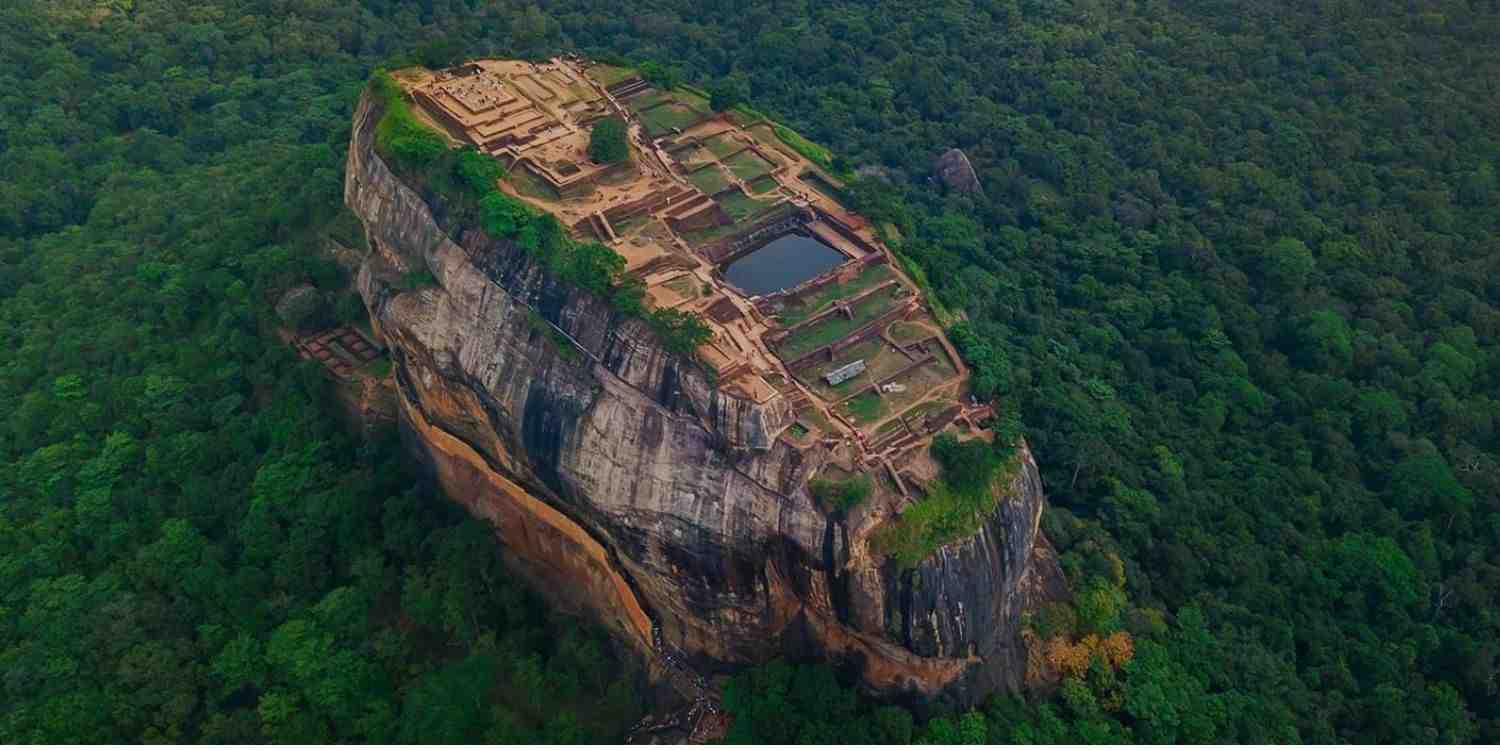
In the heart of Sri Lanka’s cultural triangle stands a wonder that blurs the line between history and myth – Sigiriya, the ancient rock fortress known as the Lion Rock. Rising 200 meters from the jungle plains, this colossal monolith has watched over centuries of kings, conquerors, and dreamers.
Once a royal citadel built by King Kashyapa in the 5th century CE, today Sigiriya stands as one of Sri Lanka’s most visited and cherished UNESCO World Heritage Sites — an emblem of the island’s architectural genius and cultural soul
 Plan your holiday
- A kingdom in the Clouds
- Legends Beyond History
- Climbing Through Centuries
- The Living Art of Sigiriya
- The Gardens of Genius
- At the Summit
- Sigiriya Today – Sri Lanka’s Crown Jewel
- Travel Essentials

A Kingdom in the Clouds
Legend says King Kashyapa built Sigiriya as both a palace and a sanctuary—a heaven above the earth. After claiming the throne from his father, he sought refuge on this massive rock to rule in solitude, protected by its sheer cliffs and elaborate defenses.
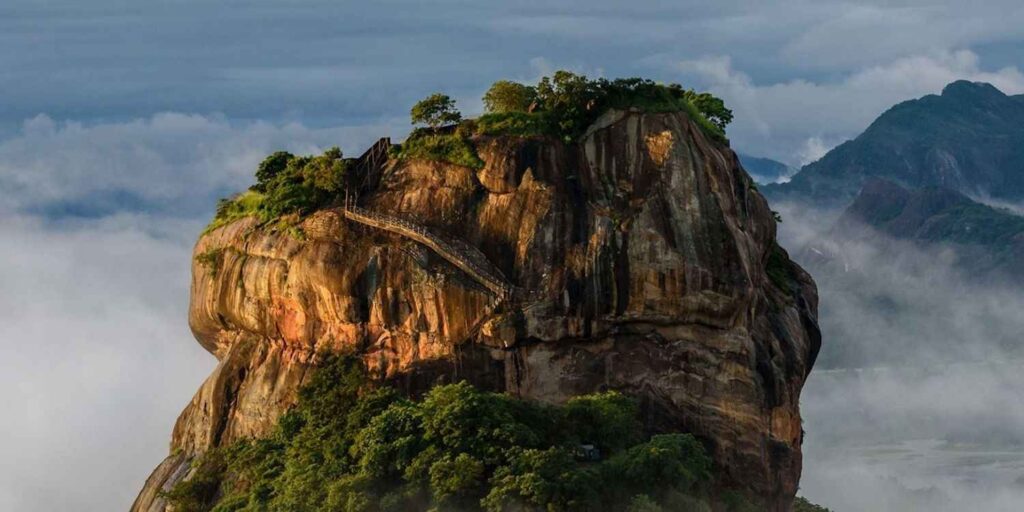
He transformed the summit into a royal residence of breathtaking design—complete with throne chambers, pools, frescoed galleries, and mirror-polished walls. Below the rock, an entire city unfolded: gardens, reservoirs, and fortifications laid out in precise symmetry.
More than a fortress, Sigiriya was a statement of artistry, a blend of engineering, spirituality, and imagination.
Read About Top 10 Exotic VISA-Free Honeymoon Destinations for Couples in 2026 | Travel Rethink Ways
Legends Beyond History – The Ravana Connection
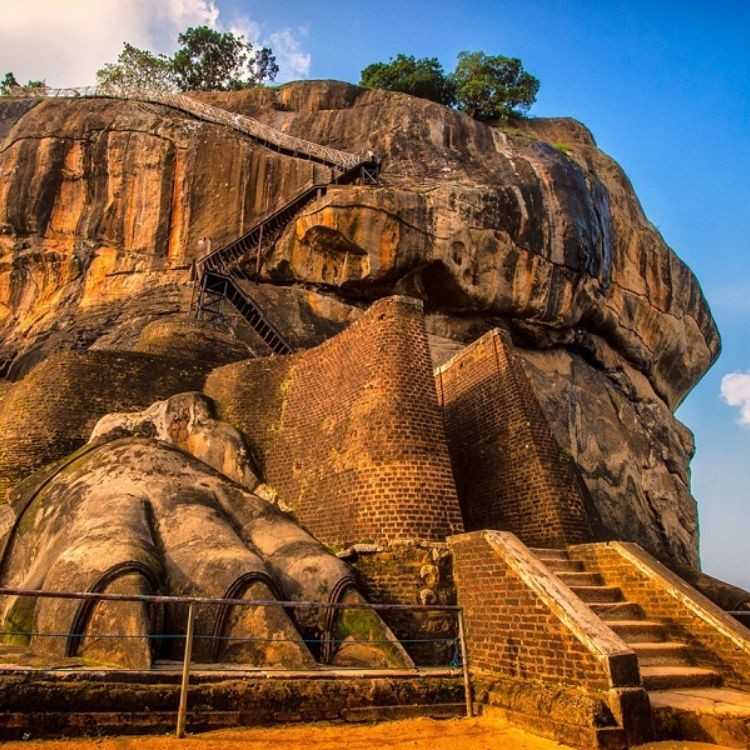
Long before King Kashyapa carved his fortress in stone, legends whispered that Sigiriya’s rock once echoed with the footsteps of King Ravana, ruler of Lanka from the Ramayana — a palace said to have touched the heavens, built for his queen Mandodari.
While historians debate the timeline, the story endures in folklore, adding mystique to Sigiriya’s heritage. The Lion Rock remains a symbol of Sri Lanka’s timeless imagination — where history and legend rise together toward the sky.
Read About South Indian Secrets: From Dosa to Filter Coffee | Travel Rethink Ways
Climbing Through Centuries
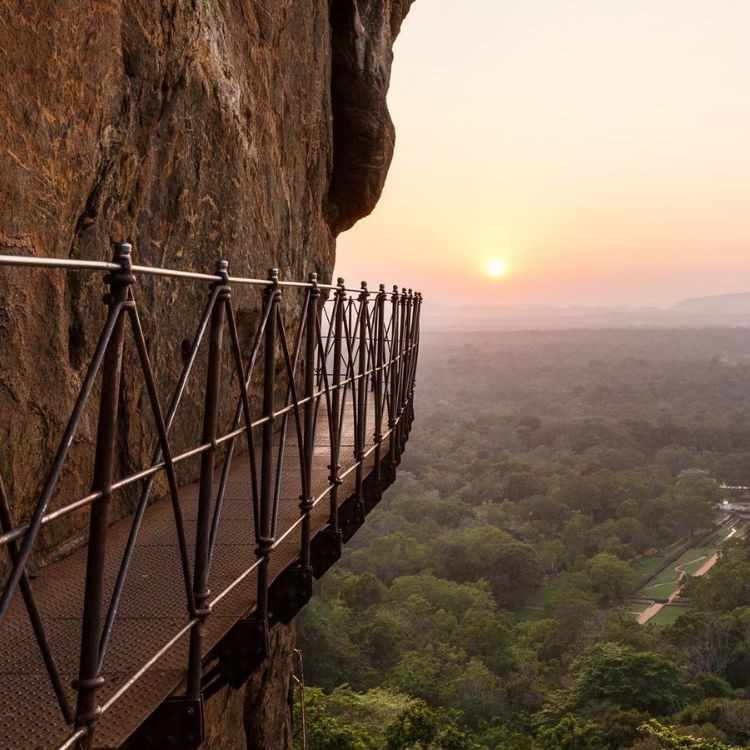
The ascent to Sigiriya is a journey through time. Visitors climb a winding trail of ancient stairways that cut through rock and forest, passing through Lion Gate, guarded by colossal carved paws that give Sigiriya its name.
Along the climb, you pass the Mirror Wall, once polished so brightly that the king could see his reflection as he walked by. Over time, travelers etched verses of admiration on its surface, a thousand-year-old guestbook of poetry.
Halfway up, you’ll find the Sigiriya Frescoes, a vivid portraits of graceful women painted 1,500 years ago, their faces still glowing with color. These celestial maidens, believed to represent apsaras or royal attendants, embody the timeless beauty of ancient Ceylonese art.
Read About 6 Places Known as Switzerland of India | Travel Rethink Ways
The Living Art of Sigiriya
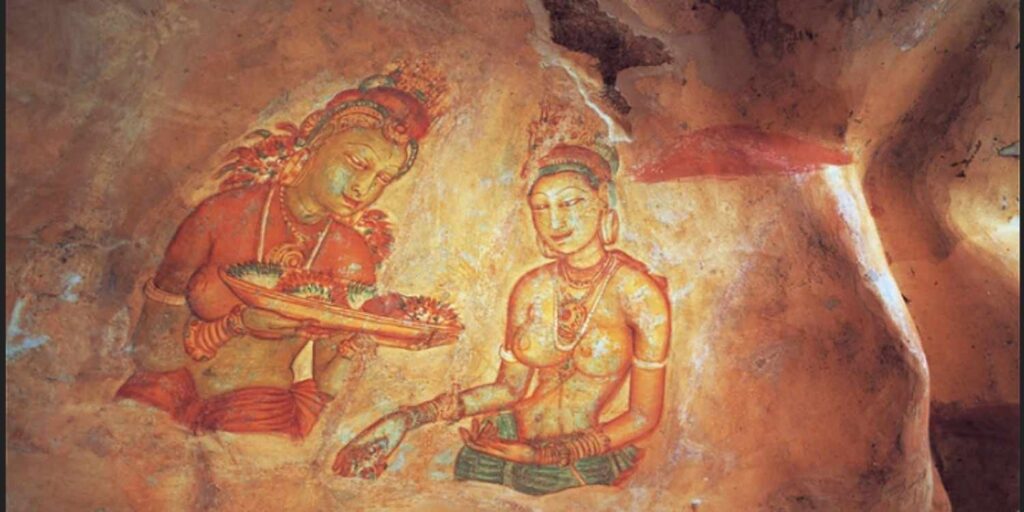
For centuries, the frescoes of Sigiriya were hidden from the world — protected within the rock’s folds. Today, they are among Asia’s most significant surviving examples of ancient painting, often compared to those of Ajanta in India.
The soft reds, ochres, and yellows used by artists still breathe life into the rock, proof of Sri Lanka’s refined aesthetics long before the medieval age. The details from flowers in hand to delicate jewelry — reflect not just art, but emotion, celebration, and devotion.
Read About Travel Photography Tips for Instagram-Worthy Shots | Travel Rethink Ways
The Gardens of Genius
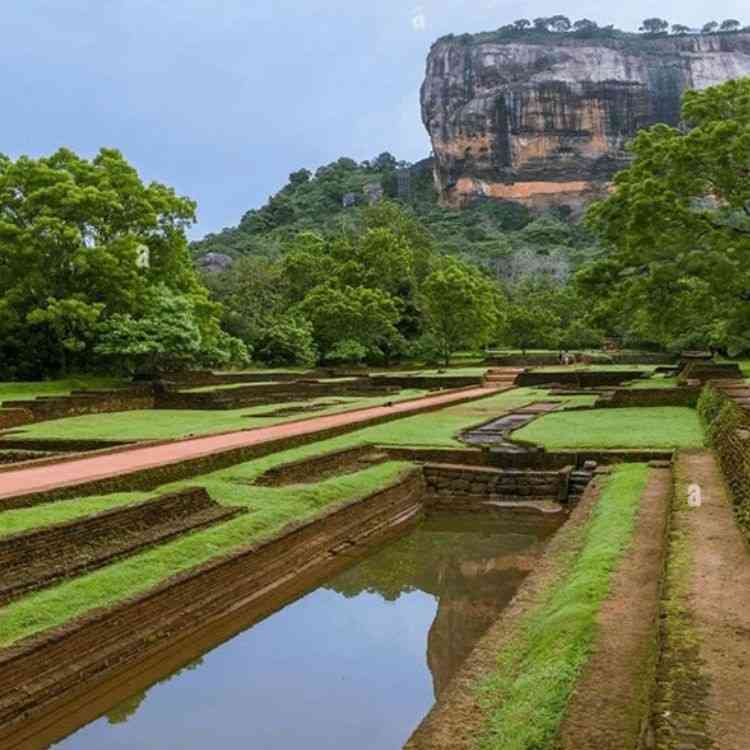
At the foot of the fortress lie the Sigiriya Gardens — among the oldest landscaped gardens in the world. Designed with geometric precision and hydraulic mastery, they include water channels, fountains, and ponds that still function today.
The Water Gardens, Boulder Gardens, and Terraced Gardens together form a living museum of landscape design — evidence of how the ancients united art and engineering to create spaces of balance and beauty.
Read About Awaken Your Senses: 2026 Multisensory Voyages That Redefine Travel | Travel Rethink Ways
At the Summit
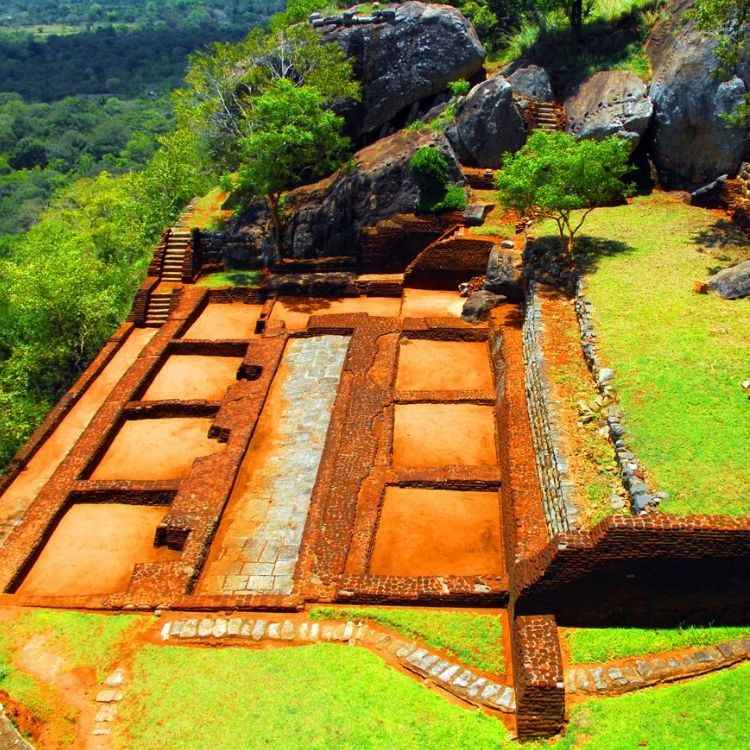
Reaching the summit is both a physical triumph and a spiritual experience. The remains of the royal palace stand silhouetted against the horizon — stone foundations, lotus pools, and viewing terraces that overlook endless jungle.
From here, the panorama stretches far into the Sri Lankan plains — lush forests, distant lakes, and tiny villages shimmering in the sun. At dawn and dusk, the golden light paints Sigiriya in hues of fire and peace.
Read About Top EMI Provider india for Stress-Free Travel | Travel Rethink Ways
Sigiriya Today – Sri Lanka’s Crown Jewel
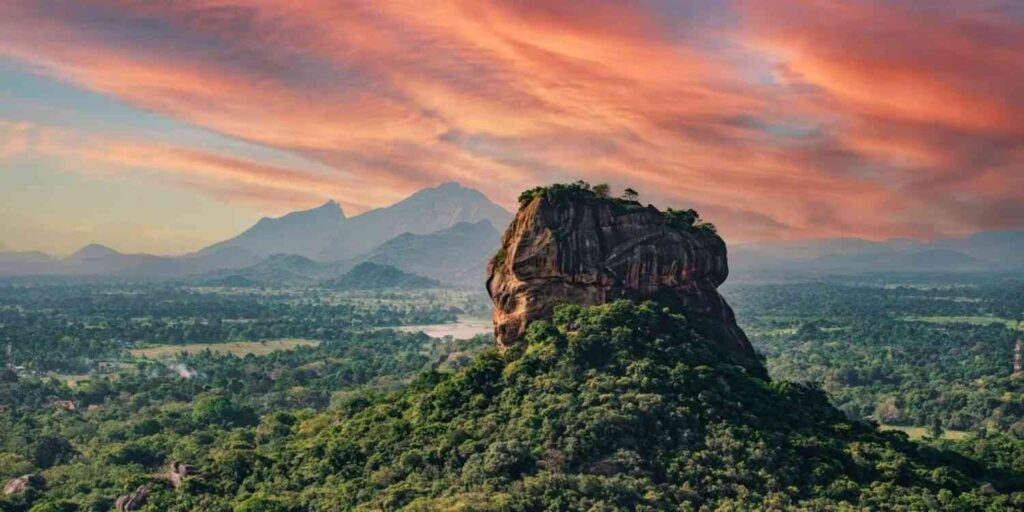
Today, Sigiriya is one of Sri Lanka’s most treasured tourist destinations, drawing travelers, historians, and photographers from across the world.
It stands at the center of the island’s Cultural Triangle, alongside Anuradhapura, Polonnaruwa, and Dambulla, forming the backbone of Sri Lanka’s heritage tourism. More than 1 million visitors climb the Lion Rock each year — not just to witness its grandeur, but to experience its serenity, artistry, and enduring mystery.
Sigiriya also serves as a symbol of national pride, often featured on Sri Lankan currency, emblems, and promotional campaigns. Conservation efforts by UNESCO and the Department of Archaeology ensure that its frescoes, gardens, and ancient stairways remain preserved for generations.
Guided tours now blend storytelling, archaeology, and sustainability — allowing visitors to walk the same paths once tread by kings, monks, and poets. Drones hover gently at sunrise, capturing Sigiriya’s silhouette against the mist — a fortress that truly floats between earth and sky.
Read About Golden Season: Where to Travel in India this Autumn 2026 | Travel Rethink Ways
Travel Essentials
Best Time to Visit: January – April (clear skies, pleasant weather)
How to Reach: 3 hours from Kandy / 4 hours from Colombo
Duration: Half-day climb, 2–3 hours for exploration
Tips: Start early, carry water, wear light clothing, and take breaks at the Mirror Wall.
Nearby: Pidurangala Rock (for panoramic Sigiriya views), Dambulla Cave Temples, and Minneriya National Park (for elephant safaris).
Sigiriya isn’t just a relic of the past — it’s a living bridge between legend and life. Every stone, staircase, and mural tells a story of ambition, artistry, and awe.
Standing atop its summit, with wind in your hair and history beneath your feet, you’ll understand why Sigiriya isn’t just Sri Lanka’s wonder — it’s the world’s whisper of eternity.
Redefining Exploration – and let the light guide your next journey.
Next Stop
10 Best International Destinations for a Magical December Getaway | Travel Rethink Ways